

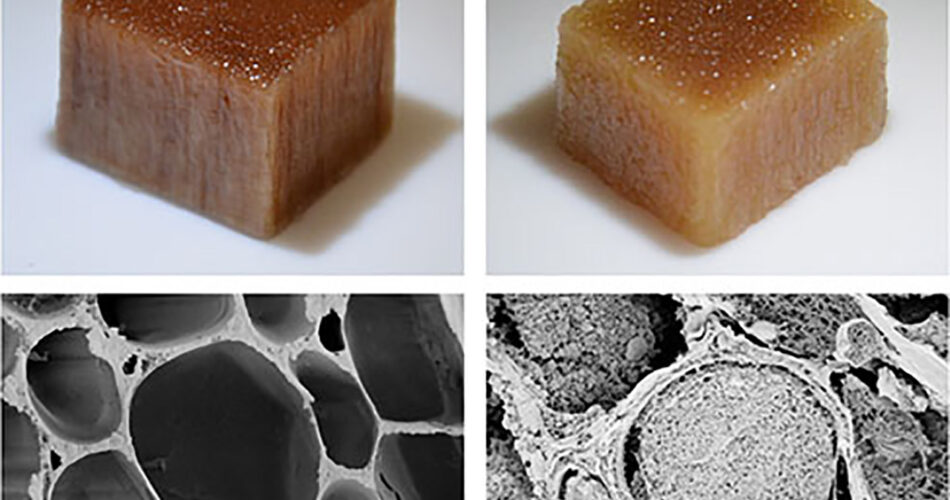


Scientists at KTH have managed to generate electricity from treated wood through transpiration, or the process of water movement through a plant. Even though this phenomenon is constantly occurring in nature, it also produces small amounts of electricity, known as bioelectricity. To harvest this electricity, they had to first nanoengineer the wood.

Nanoengineering allowed the scientists to improve its properties, since electricity generation in wood is influenced by several factors such as area, porosity (density), surface charge, how well liquid can pass through, as well as the water solution itself. They found by tuning the pH difference between wood and water, it was able to achieve a potential of up to one volt and a power output of 1.35 microwatts per square centimeter, due to an ion concentration gradient. For now, this is enough electricity to power an LED lamp, and in the future, they hope to run a laptop using a piece of wood that measures at least one square meter that is one centimeter thick.

We have compared the porous structure in regular wood with the material we have improved with regard to surface, porosity, surface charge and water transportation. We have measured electricity generation that’s ten times higher than natural wood. The great advantage of this technology is that the wood can readily be used for other purposes once it’s depleted as an energy source, such as transparent paper, wood-based foam and different biocomposites,” said Yuanyuan Li, Associate Professor at the Division of Biocomposites at KTH.
Source link


