

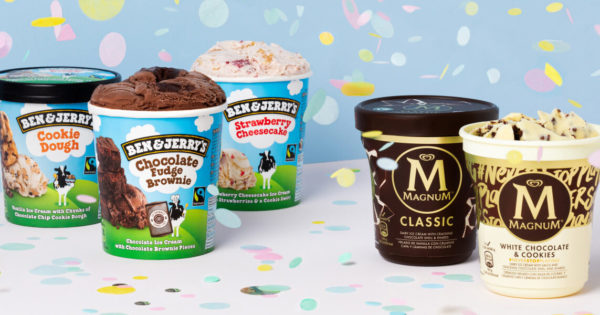
The days of chasing the ice cream truck around the block may be long gone, but Magnum maker Unilever is continuing its play for consumers’ digital loyalty with an ambitious mission to grow its ice cream delivery service.
The Anglo-Dutch group has bought 29 direct-to-consumer (DTC) companies since 2015, including Dollar Shave Club and Paula’s choice. Now it’s hoping cold deserts will give it an even bigger scoop of the burgeoning online delivery market; the food side of which, according to Market Research Firm IMARC Group, is set to reach $223.7 billion by 2027.
Everything from pizzas to paratha, dumplings to sushi can now be delivered piping hot within 30 minutes. However, (notoriously difficult to transport) ice cream is just catching up. Unilever’s newly appointed president of ice cream, Matt Close, told Adweek he wants the segment to pull in just over $500 million in revenues for the CPG giant by 2025.
The division – which owns Wall’s portfolio, including Magnum, Breyers and Good Humor among others—accounts for $7 billion of Unilever’s annual $29 billion turnover. It kickstarted its DTC journey in 2018 with the launch of Ice Cream Now (ICNOW) a platform dedicated to frozen, direct-to-consumer desserts.
The proposition launched with a single freezer cabinet in a “mom and pop” store in Amsterdam four years ago. It’s been slowly building since, now delivering ice cream in more than 40 markets around the world, including the U.K., U.S., Canada, Brazil, Europe and China (its fastest-growing market).

A virtual storefront, dubbed The Ice Cream shop, sells packaged ice cream products across apps, including Uber Eats and GrubHub. Unilever has recently expanded this initiative with Instacart to reach online grocery shoppers too. It has also teamed up with brands such as Pizza Hut and Domino’s to sell directly through its platforms. In fact, pizza is the product consumers are most likely to order ice cream alongside, revealed the company.
In 2021 Unilever’s ice cream e-commerce sales grew 60% year-on-year.
This summer, Unilever deepened its experiments in the space with a new way to get ice cream to Los Angeles residents through a partnership with Robomart, a store-hailing startup that sends a store on wheels to people’s homes.
Close said the business was now eyeing different targets across various markets, with a blueprint to be “two-times in some, then 10-times in some” within the next three years.
Hitting the sweet spot
The Unilever veteran took up his latest position following a marketing shakeup that saw the top world’s second-largest ad spender drop the traditional chief marketing officer (CMO) title in favor of a chief digital and commerce officer role for Conny Braams to reflect the “blurring lines between digital marketing and commerce.”
As part of this change, the Dove owner’s marketing remit was split into five category marketing leads across different segments, from nutrition to beauty to ice cream, where Close was appointed.

Since taking the helm, he has focused on building out the ice cream portfolio’s marketing with a strategy founded on “sparking happiness” and pushing ice cream sales away from seasonal peaks. Both of these factors have influenced increasing investment the DTC space.
“We want to de-seasonalize the business for all sorts of reasons,” Close said. “On the whole, when people are eating ice cream at home, they’re not seasonally orientated. 24% of the turnover of ICNOW was in Q4.”
He said the next job was to meet that demand in a “frictionless” way through delivery and app partners.
The worst thing you can do is force purpose on a brand.
Matt Close, president of ice cream, Unilever
And beyond app placement, there’s also the job of marketing this. Echoing Braam’s comments to Adweek in early November that Unilever was gearing up for a retail media boom, Close said he was bringing his marketing and e-commerce teams closer together to facilitate its DTC ambitions.
“These teams really spend money where they think it will make a big difference, and we use a lot of retail media,” he said, adding that Unilever had recently conducted 100 different experiments across different media to see what drove the highest conversation.
Though he couldn’t divulge specifics, he confirmed the results would “definitely” put a higher portion of the ice cream department’s total budget behind retail media.
With outgoing CEO Alan Jope having outlined his vision for every brand Unilever owns to serve a purpose, and a huge growth level, Close admitted his division was still “a little bit behind” the rest of the company.
“The worst thing you can do is force purpose on a brand,” he said. “We’re not there yet with Cornetto. We’ve explored an anti-bullying angle because it’s a love brand. That didn’t work; there’s something sweet there with it. There’s a bit of work to do there.”
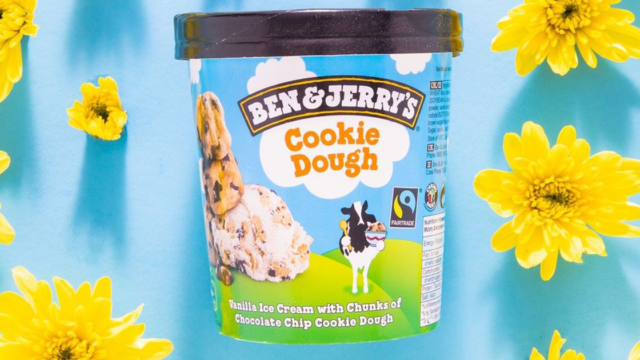
The company is currently embroiled in a legal dispute with one of its best-known brands, Ben & Jerry’s, over the sale of its license in Israel, which the Vermont-founded company argues violated the terms of Unilever’s 2000 takeover agreement. Close said he had a strong relationship with the subsidiary’s leadership team but could not comment on legal proceedings.
Source link


